$16.8M
Total Referendum/Construction Value


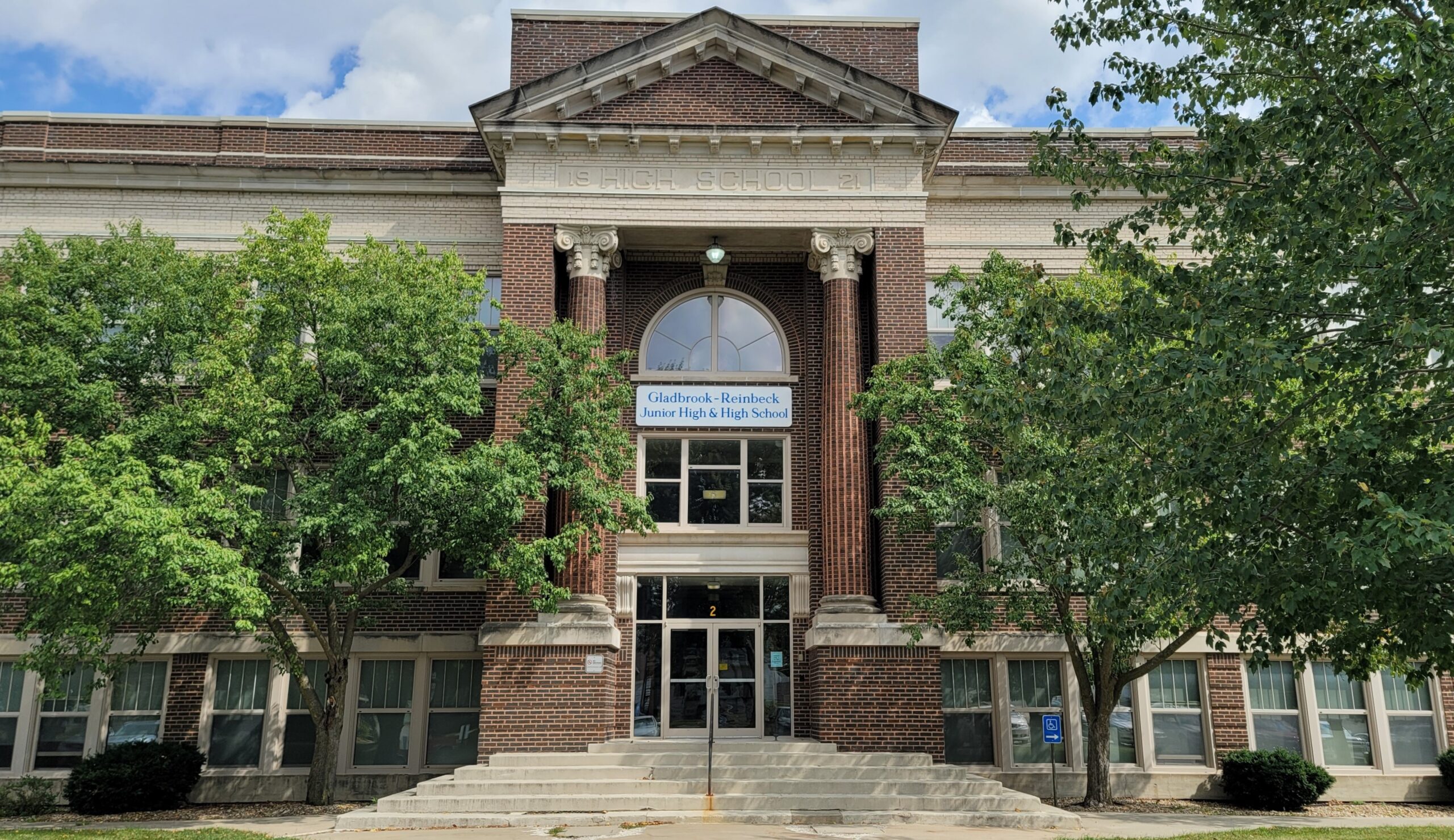
Gladbrook-Reinbeck Community School District (GR CSD), a rural district in Iowa, faced a familiar but urgent reality: aging infrastructure, constrained funding, and increasing pressure to make difficult decisions about the future of its school buildings.
Over time, their needs compounded and maintaining safe, functional, and modern learning environments required investments the district was not positioned to make on its own. Their 1921-era classrooms and systems were over 100 years old, costly to maintain, and no longer fit today’s programs. However, without a viable path forward, the district faced the possibility of consolidating, or even closing, school buildings.
Layered on top of these challenges was a history that made progress even more difficult. In 2017, community members formally petitioned the State of Iowa to dissolve the district. Years of tension between the communities of Gladbrook and Reinbeck, combined with leadership turnover and prior facility decisions, had eroded trust and created a highly complex environment for any future investment.
By the time GR CSD began exploring a solution, it was clear that the issue wasn’t just facilities, it was alignment among leadership and the community. The district had aging, inefficient buildings that required significant upgrades, but it lacked both the financial flexibility and internal capacity to confidently pursue large-scale improvements. More critically, there was no shared understanding of what would be supported. A 2022 referendum had failed with just 36% approval, reinforcing the perception that meaningful investment was unlikely to pass.
But the deeper challenge was trust. Community division ran deep. Leadership assumptions about priorities did not reflect community sentiment, and traditional approaches—developing a plan and presenting it for approval—had repeatedly fallen short.
The district wasn’t just trying to solve an infrastructure problem. It was trying to move forward in an environment where many believed forward progress wasn’t possible.
Our approach began with a simple but often overlooked premise: a plan is only viable if it reflects what a community understands, values, and is willing to support. That required moving away from a decision-first model and toward a structured, community-informed process grounded in data, transparency, and continuous feedback.
We integrated facility planning, financial strategy, and community engagement into a single, disciplined system. Early in the process, we worked with district leadership to assess readiness—both within the board and across the community—to understand where alignment existed and where it didn’t. This ensured that strategy was built on real conditions, not assumptions and helped to create a stronger path forward.
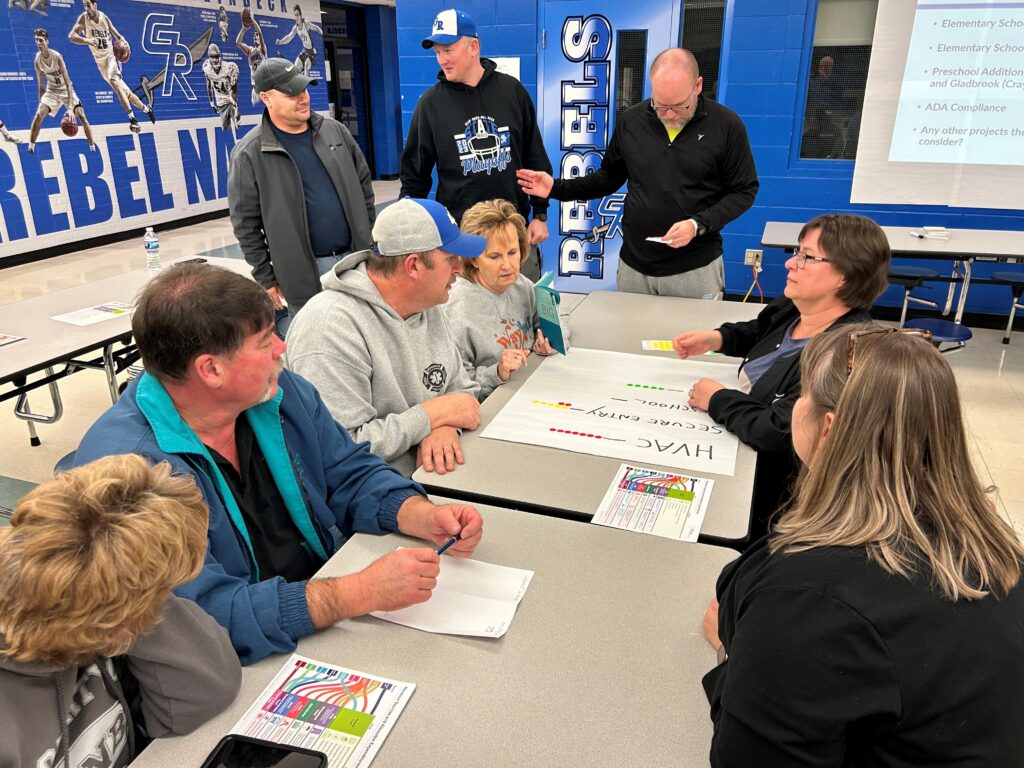
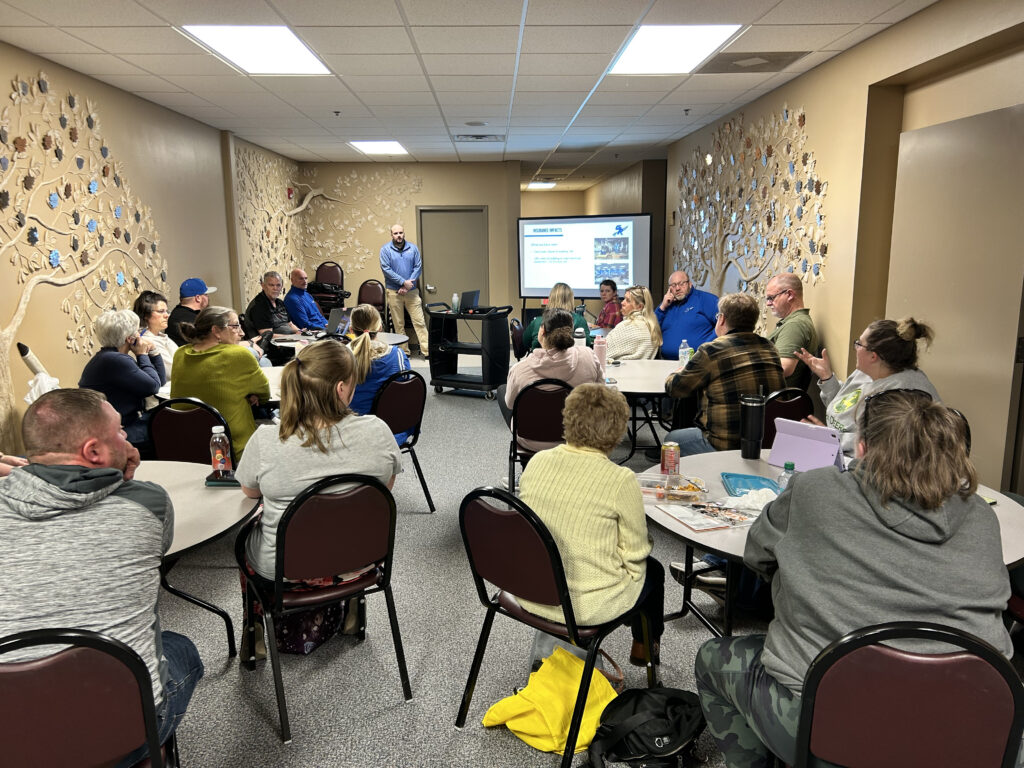
From there, engagement became the foundation. Instead of limited or inviteonly input, the district opened the process to broad participation. As a part of our community engagement process, we developed and maintained a separate facility planning website and created social media posts to draw attention to the input process and to inform the broader community. Community meetings, task forces, and surveys created space for honest dialogue and surfaced what had been missing: clear insight into priorities,
concerns, and tax tolerance.
Just as importantly, we served as a neutral third party in a low-trust environment. That neutrality created space for more open, honest participation and helped bridge the gap between leadership and the community. Over time, the plan evolved, and the scope was refined to focus on what mattered most—academic spaces, safety, and accessibility—while less critical elements were removed. Financial strategies were adjusted to reduce and stabilize the tax impact, and a phased approach demonstrated fiscal responsibility before asking the community for additional investment.
For a district where success had once been considered highly unlikely, this represented more than a passing vote. It marked a fundamental shift in alignment. Both communities showed meaningful gains in support, and the district achieved its first successful bond referendum in decades.
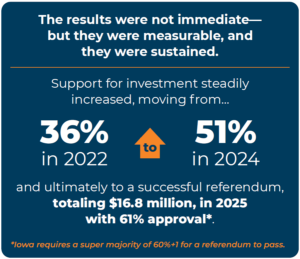
At the same time, SitelogIQ introduced methods to continuously measure and track community readiness. This wasn’t a one-time assessment—it was an ongoing process. As sentiment shifted, so did the strategy. SitelogIQ’s in-house referendum forecasting tool and historical data helped quantify the likelihood of success, while real-time monitoring of feedback allowed the district to adjust scope, timing, and messaging with precision.
This project is currently in the design phase with SitelogIQ’s experts, with construction slated to begin summer of 2026. Construction will continue in summer of 2027 to minimize disruptions to the District’s daily activities.
In addition, SitelogIQ is also partnering with the District to make major facility improvements to its Elementary School. Our work to development this project helped the GR CSD secure funding through SAVE (Secure and Advanced Vision for Education), which is a statewide 1-cent sales tax dedicated to school infrastructure projects and does not impact local property taxes. The project scope includes:
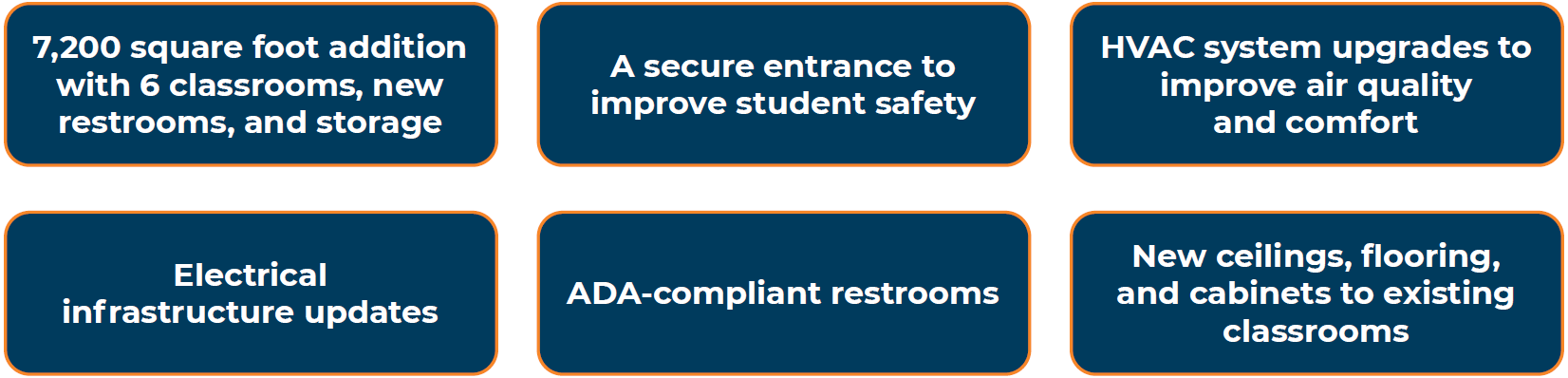
A groundbreaking ceremony was held in April of 2026 to kick off construction, with work on the original elementary school building scheduled for completion in August and the addition wrapping in November.
The work in Gladbrook-Reinbeck was about more than passing a referendum, it was about helping a district regain confidence in its future. Facing aging infrastructure, limited financial flexibility, and years of community division, the district needed more than a facilities plan. It needed a process that could rebuild alignment, restore trust, and create a shared vision for moving forward. Through a structured, data-informed approach, SitelogIQ partnered with district leadership and the community to turn uncertainty into action and skepticism into measurable progress.
What makes this partnership significant is not only the outcome, but how the outcome was achieved. Rather than relying on assumptions or predetermined solutions, the district committed to listening, adapting, and engaging the community throughout the process. By combining facility planning, financial strategy, in-house referendum forecasting, and ongoing community engagement, SitelogIQ helped create a plan that reflected both the district’s operational realities and the community’s priorities.