

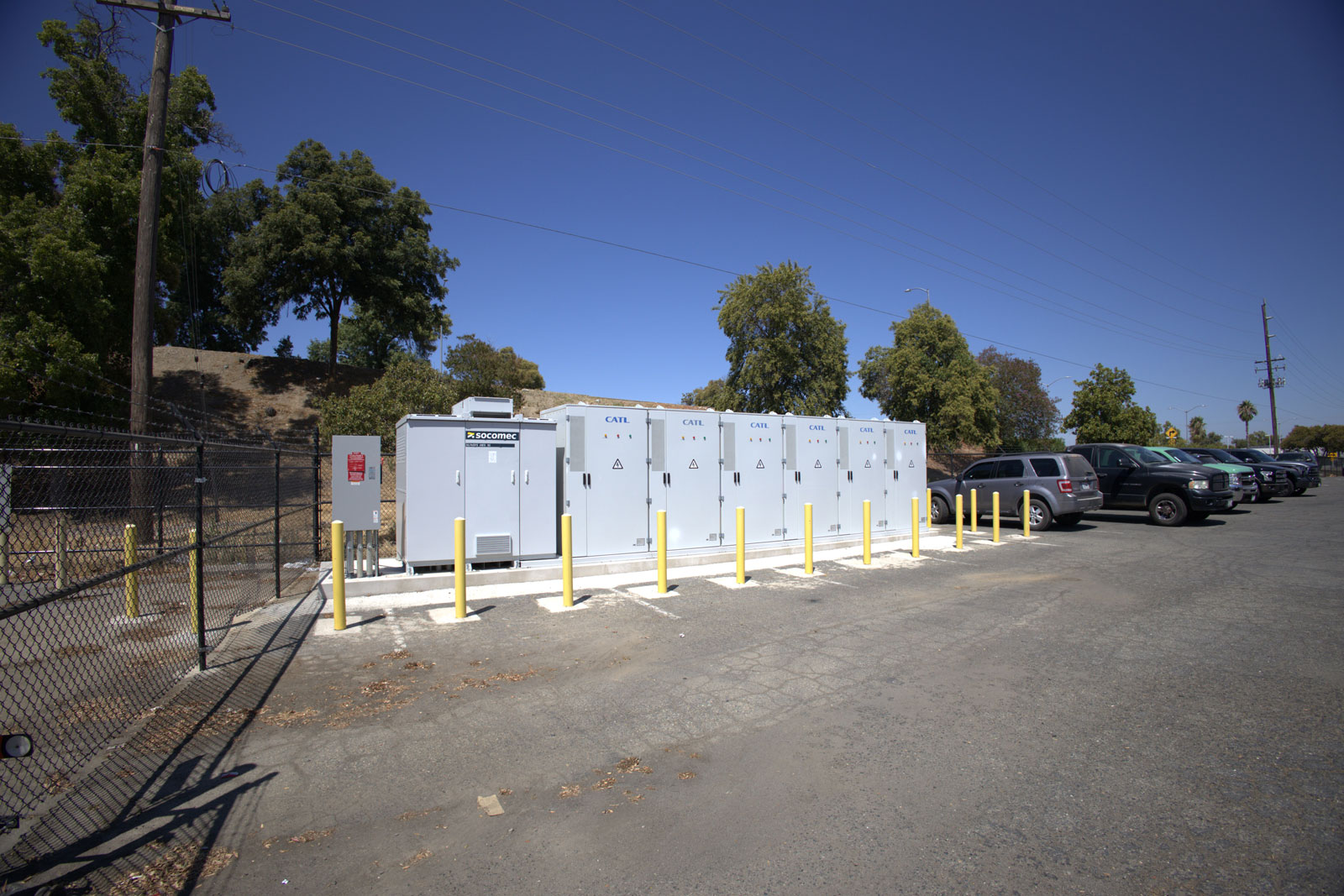
Control Peak Demand Spikes Before They Impact Your Costs
For many commercial businesses, energy costs are not just driven by total usage, but also by peak demand spikes. A spike in electricity use as short as 15 minutes can set demand charges that make up upwards of 70% of a monthly commercial utility bill.
These charges exist because utilities must build and maintain infrastructure to meet the highest moments of demand on the grid—but that charge is passed on to you as the customer. Whether it is a hot afternoon, equipment cycling on at once, or an unexpected load increase, a brief peak can have a lasting and unpredictable financial impact.
SitelogIQ works with commercial organizations to reduce those peaks and regain control. Through battery storage and integrated distributed generation solutions, we help you manage when and how energy is used, so costs become more predictable and less reactive.
What Are the Benefits of Battery Energy Storage Systems (BESS)?
Battery storage systems give organizations more control over how and when energy is used. Instead of relying entirely on the grid, facilities can store energy and deploy it when costs are highest, demand spikes, or reliability is at risk.
In many cases, battery systems work alongside existing infrastructure like solar or other on-site generation solutions. They store excess energy when it is available and use it when it matters most, whether that is during peak demand periods, grid outages, or high-cost time-of-use windows.
Businesses with battery storage systems benefit from:
- Lower energy costs
- Reduced peak demand charges
- Protection from grid and rate volatility
- Improved reliability and resilience
- Better use of on-site energy generation
- Opportunities to participate in energy programs, such as capacity markets
Why Waiting on Energy Strategy Is Getting More Expensive
See why commercial energy rates keep increasing and what organizations are doing now to stay ahead of the next wave of cost pressure.
What Battery Storage Solutions Exist for Commercial Businesses?
SitelogIQ has extensive experience working with the nation’s largest commercial real estate portfolios, fleet operators, healthcare systems, auto dealership groups, and Fortune 1000 companies.
Any organization with variability in usage profile can benefit from battery storage, but the impact is especially clear in environments where costs and predictability matter most.

Auto Dealerships

Outpatient Healthcare and Specialty Care Centers
Hospitals and Acute Care Facilities

Commercial Real Estate Portfolios
Auto Dealerships
Outpatient Healthcare and Specialty Care Centers
Hospitals and Acute Care Facilities
Commercial Real Estate Portfolios
Your One-Stop Battery Storage Partner
SitelogIQ helps rapidly plan, roll out, and measure the impact of battery storage and other distributed generation solutions. In addition to being a consultant and a contractor, we’re also your one-stop strategic partner to swiftly create and execute programmatic energy efficiency, renewables, and electrification measures.
Here’s what you gain from our partnership:
- A turnkey partner that manages all project phases
- Comprehensive, portfolio-wide approach
- Nationwide footprint—our team has completed work in all 50 states
- Single source of accountability
- Partner advocate and marketplace agent
- Funding and incentive management—we ensure you never leave money on the table
- Centralized communication between corporate and field teams
- Rapid results—everything we do is meant to drive action for the next project step
Frequently Asked Questions About Battery Storage
-
How does battery energy storage reduce costs?
Battery systems store energy when it is less expensive and use it during peak demand periods, helping reduce demand charges and avoid higher time-of-use rates.
-
How long can a battery system provide power?
It depends on the system size and how it is configured, but most commercial systems are designed to support critical loads for several hours during peak periods or outages.
-
Can battery storage work with existing solar systems?
Yes. Battery storage is often paired with solar to capture excess generation that would otherwise be sent back to the grid at a lower value. When your system produces more energy than the building is using, the battery stores that overgeneration. Later, when solar output drops or energy costs are higher, the battery discharges to meet demand, reducing the need to pull more expensive electricity from the grid.
-
Is battery storage only useful during outages?
No. Most of the financial value comes from daily cost management, like reducing peak demand and shifting when energy is used.
At the same time, battery storage plays a critical role during outages. It responds in milliseconds, providing immediate power while back-up generators start up. That short window can make a real difference in environments where even a brief interruption impacts operations, safety, or patient care.
-
What kind of return on investment can I expect?
ROI varies based on energy usage, utility rates, and incentives, but many organizations see payback within a few years when systems are properly designed.
-
Does battery storage require a large upfront investment?
Not always. Many projects are structured with flexible financing options that reduce or eliminate upfront capital costs.
-
Can battery energy storage help us participate in energy programs?
Yes. In many markets, battery systems can be used to participate in programs like demand response, capacity markets, or other grid services. This allows organizations to reduce load when the grid is stressed.
-
How are demand charges actually calculated?
Demand charges are based on your highest level of electricity use during a short window of time within a billing period, not your total energy consumption. Utilities measure this as the peak average load over a set interval, and apply a charge based on that single highest spike.
That means even if your overall energy use is consistent, one brief surge in demand can set a higher charge for the entire month. Two facilities using a similar amount of electricity can end up with very different bills depending on when and how their energy is used.
We’re here to help
Connect with Us
"*" indicates required fields