7 min. read


Written by

About the Author

California is preparing for its next major investment in zero-emission vehicle (ZEV) infrastructure.
Recently, the California Energy Commission (CEC) approved a $95.2 million Clean Transportation Program Investment Plan for fiscal year 2026–27.
The funding includes:
- $48 million for light-duty EV charging infrastructure, with a focus on DC fast charging (DCFC) and charging at or near home.
- $30.2 million for medium- and heavy-duty infrastructure supporting freight, ports, public fleets, and school buses.
- $15 million for hydrogen refueling infrastructure
- $2 million for workforce training and development
Specific programs, eligibility requirements, award amounts, and application dates have not been announced. The broader Clean Transportation Program includes projected allocations through fiscal year 2028–29, so some opportunities may take time to reach the market.
SitelogIQ is closely monitoring release dates to ensure our customers can take advantage of any opportunities from this funding. Check back for updates as announcements are made.
For property owners and fleet operators, that creates a valuable planning window right now.
What’s Included In CEC’s EV Funding Programs?
The funding plan gives organizations an early look at the types of infrastructure California intends to support. Three priorities stand out:
- Expanded charging where people already spend time. The light-duty allocation focuses on DC fast charging and charging at or near home, creating potential opportunities for properties that serve residents, tenants, employees, customers, and surrounding communities.
- Preparation for more medium- and heavy-duty vehicles. The $30.2 million allocation is roughly double the amount directed to this category during the previous fiscal year, according to ACT News.
- Demonstrated community benefits. At least 50% of Clean Transportation Program funding must support projects that benefit low-income Californians or residents of disadvantaged and low-income communities.
Organizations that understand their properties, projected charging needs, costs, and community impact will be better prepared to evaluate future programs when details become available.
Identify Which Properties May Be Strong Candidates for EV Charging
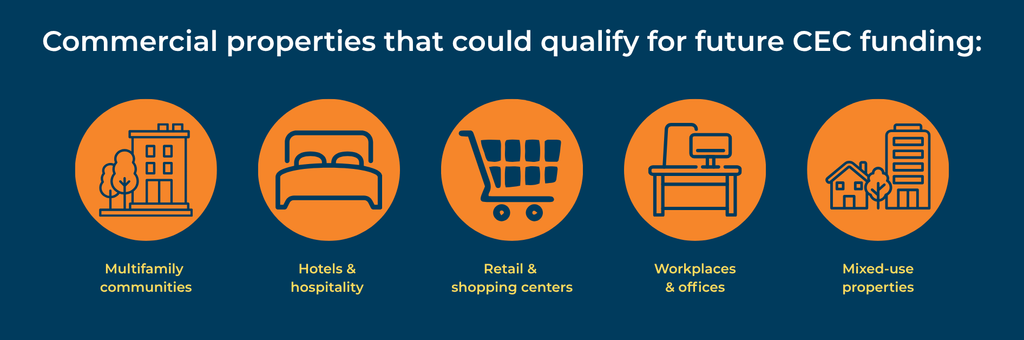
The CEC has not announced which commercial property types will qualify for the $48 million light-duty charging allocation. Still, its focus on DCFC and charging at or near home points to several types of properties that could benefit from future programs:
Multifamily communities
- Apartments, senior living, and other residential communities can provide reliable charging for residents as an added and highly sought after on-site amenity. Properties with shared parking, older electrical infrastructure, or growing resident demand may have the greatest need for financial and technical support.
Hotels and hospitality properties
- Hotels are a natural fit for destination charging because guests often remain parked for several hours or overnight. Depending on the location and program design, properties near highways, airports, business districts, or popular destinations could also support broader public charging needs.
Retail properties and shopping centers
- Retail locations can provide public charging where drivers already spend time. Properties near heavy traffic corridors, longer customer dwell times, and convenient access from major roads may be well suited for Level 2 charging or DC fast charging.
Workplaces and office properties
- Shared charging can serve employees, tenants, visitors, and company vehicles. Owners may also be able to plan infrastructure that supports future tenant demand without installing every charging port at once.
Mixed-use properties
- Locations that combine residential, retail, office, or hospitality uses may be able to serve several groups of drivers with one coordinated charging plan.
Future programs may provide funding directly to property owners or through charging providers, utilities, and other project partners. As we continue to closely monitor these updates, SitelogIQ is here to help you align with the appropriate funding lane to ensure your property can take advantage of available incentive dollars.
For more information on what makes a property a practical site for public charging, watch our Expert Insights segment below.
Why Property Owners Should Start Evaluating Opportunities Now
Future funding could reduce the cost of installing EV charging infrastructure, but every property will not be an equally strong candidate. Owners can begin narrowing their options by evaluating:
- Charging demand: Review tenant requests, local EV adoption, nearby charging availability, parking behavior, and typical dwell times.
- Electrical readiness: Assess available electrical capacity, utility service, parking layouts, charger placement, and potential upgrade requirements.
- Portfolio priorities: Compare properties based on demand, construction cost, electrical capacity, visibility, and potential community benefit.
- Future expansion: Develop a phased approach that meets near-term demand and makes it easier to add charging ports later.
- Operating strategy: Decide who will use the chargers, how access and pricing will work, and whether charging will serve as an amenity, operating service, or potential revenue source.
- Maintenance responsibility: Establish who will monitor charger performance, respond to outages, and manage long-term service.
This work can help property owners and operators determine where EV charging makes financial and operational sense before committing capital or pursuing an incentive.
Building a Fleet Strategy Before CEC Funding Goes Live
Outside of the light-duty charging for commercial properties, an additional $30.2 million in funding could create new opportunities for qualifying medium- and heavy-duty fleet projects. Final rules will determine which private and public fleets can apply, but operators can begin building their fleet electrification strategy now.
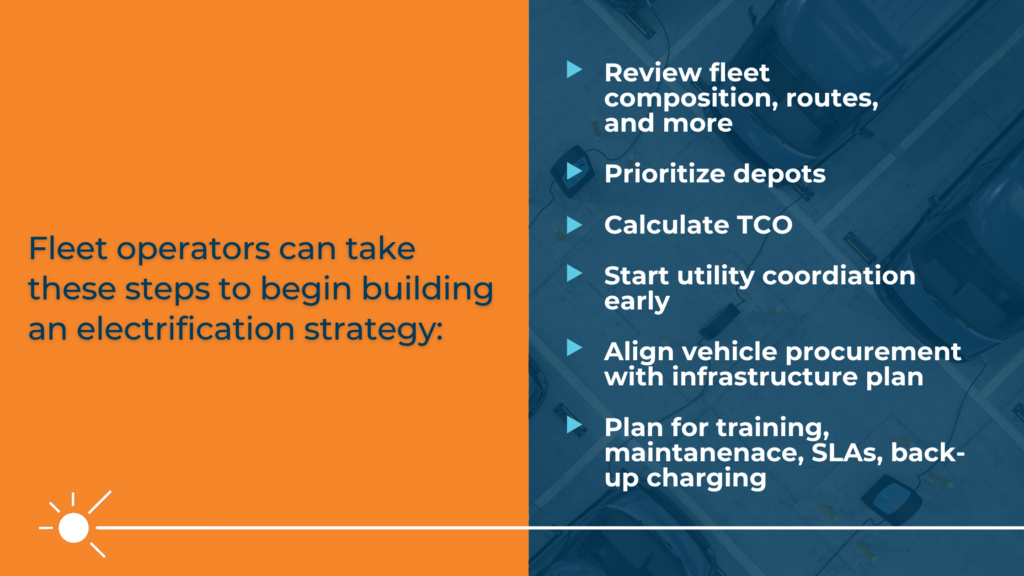
SitelogIQ can help fleet operators with:
- Reviewing fleet composition, routes, duty cycles, daily mileage, and vehicle dwell times.
- Identifying vehicles that can transition without disrupting operations.
- Prioritizing depots based on electrical capacity, layout, vehicle schedules, and utility constraints.
- Calculating total cost of ownership across vehicles, infrastructure, electricity, maintenance, and available incentives.
- Starting utility coordination early to understand service requirements and potential upgrade timelines.
- Aligning vehicle procurement with engineering, permitting, construction, and charger activation.
- Planning for driver training, charger maintenance, service agreements, and back-up charging.
It’s not uncommon for operators to “put the cart before the horse” when it comes to fleet electrification, often ordering electrified vehicles before creating a sound strategy for charging infrastructure. This often leads to avoidable costs, operational headaches, and low driver confidence. A phased plan keeps vehicle purchasing and infrastructure deployment aligned, while giving the organization time to address utility and construction requirements.
Your One-Stop Partner for EV Funding to Installation
Public funding can improve project economics, but it should not determine which properties, vehicles, or charging equipment an organization selects.
Property owners and fleet operators should first identify where infrastructure is needed, what each site can support, and how deployment fits their financial and operational goals. Future CEC programs can then be applied to projects that are already technically sound and positioned to move forward.
SitelogIQ helps organizations assess sites, prioritize properties and depots, plan infrastructure, coordinate with utilities, manage funding applications, and complete installation through one coordinated program. We’ve helped our customers apply for more than $50 million from incentive programs.
Learn more about our commercial EV charging infrastructure services and fleet electrification strategy, or contact our team to begin evaluating your California properties.