5 min. read
Written by

About the Author

Over the last decade, commercial building owners and operators made a strategic shift from fluorescent to LED lighting—modernizing facilities and delivering meaningful efficiency gains. The U.S. Department of Energy reports that widespread LED adoption has saved billions in energy costs and reduced national lighting electricity consumption by hundreds of terawatt hours annually.
Those early LED investments paid off. Now, many of those first-generation systems are approaching 10 or more years in service, creating a natural opportunity to evaluate how lighting can continue supporting operational, financial, and sustainability goals.
Today, LED lighting represents the standard across U.S. commercial buildings. The next phase of modernization isn’t about replacing what worked—it’s about enhancing performance, strengthening reliability, and aligning lighting systems with evolving operational and compliance expectations.
For organizations managing multi-property portfolios, even well-performing legacy systems can benefit from a fresh evaluation as technology and business demands evolve.
Here are five reasons commercial businesses may consider reassessing their LED lighting strategy.
1. Maturing LED Systems Present a Strategic Upgrade Opportunity
Many first-generation LED systems were designed with 50,000-hour life ratings, offering years of dependable service. As these systems approach the 10-year mark, normal component aging—particularly driver performance—can begin to impact consistency.
Over time, facilities may notice:
- Gradual shifts in color appearance
- Uneven light levels
- Increased spot replacements
- Isolated driver failures
While these issues are typical for systems reaching maturity, they can create incremental maintenance demands—especially across multi-property portfolios.
Proactive evaluation allows organizations to plan improvements on their timeline rather than reacting to isolated failures.
2. Lighting Has Evolved into a Connected Infrastructure Layer
LED lighting has progressed beyond simple fixture replacement. It is increasingly integrated into broader building systems.
The Lighting Controls Academy reports steady growth in networked lighting control systems across commercial markets. Wireless controls, occupancy-based scheduling, and remote monitoring are becoming common features in modern facilities.
Many early LED retrofits focused primarily on efficiency gains. Fixtures were upgraded, but controls often remained unchanged.
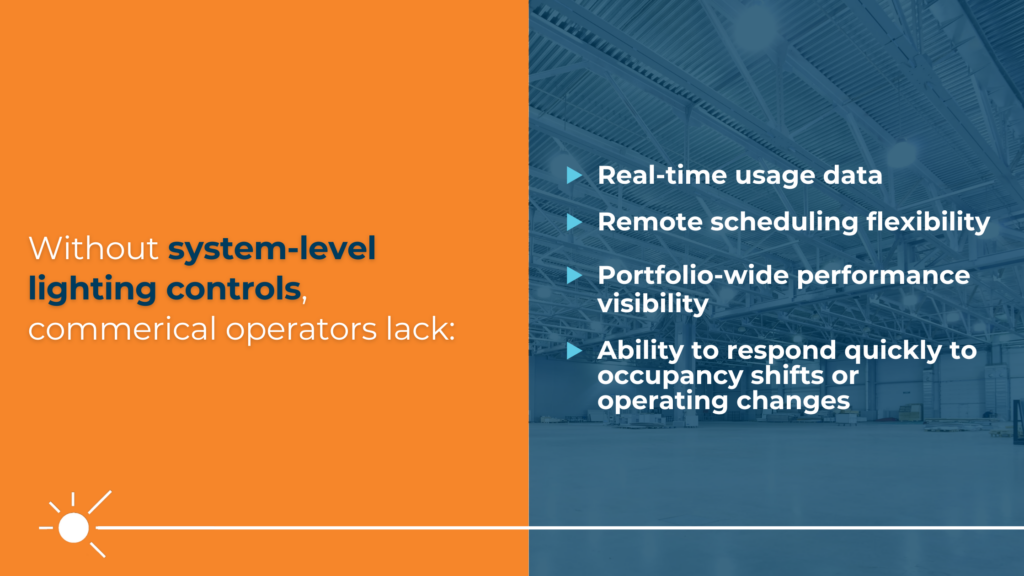
Without connected controls, organizations may lack:
- Real-time energy and usage data
- Remote scheduling flexibility
- Portfolio-wide visibility
- Rapid responsiveness to occupancy or operational shifts
As HVAC, access control, and security systems become more centralized, lighting presents an opportunity to align with that same level of intelligence and oversight.
3. Lighting Quality Plays a Growing Role in Space Experience
Lighting significantly shapes how tenants, residents, customers, and employees experience a building space. The Illuminating Engineering Society emphasizes that appropriate illuminance, glare control, and color rendering support visual comfort and productivity.
Early LED systems delivered strong efficiency improvements. Since then, lighting technology has advanced in areas such as:
- Glare reduction
- Color consistency
- Enhanced color rendering
- More uniform light distribution
For multi-location organizations, even subtle differences in lighting quality can influence brand consistency. Retail environments, industrial facilities, healthcare spaces, multifamily communities, and office properties all benefit from lighting that reinforces safety, comfort, and brand standards.
A lighting reassessment helps ensure properties reflect today’s expectations—not just yesterday’s benchmarks.
4. Planned Modernization Supports Better Financial Outcomes
The LED-to-LED incentive landscape has evolved. Utility programs have evolved alongside lighting technology. As LED adoption has matured, many incentive structures now prioritize advanced controls, networked systems, and measurable performance improvements rather than basic fixture conversions.
Evaluating systems proactively allows organizations to:
- Align upgrades with available incentives
- Coordinate improvements across portfolios
- Avoid reactive procurement
- Minimize operational disruption
Strategic planning preserves optionality and maximizes financial return—rather than compressing decisions into urgent replacement cycles.
5. Evolving Compliance and Sustainability Expectations Favor Modern Systems
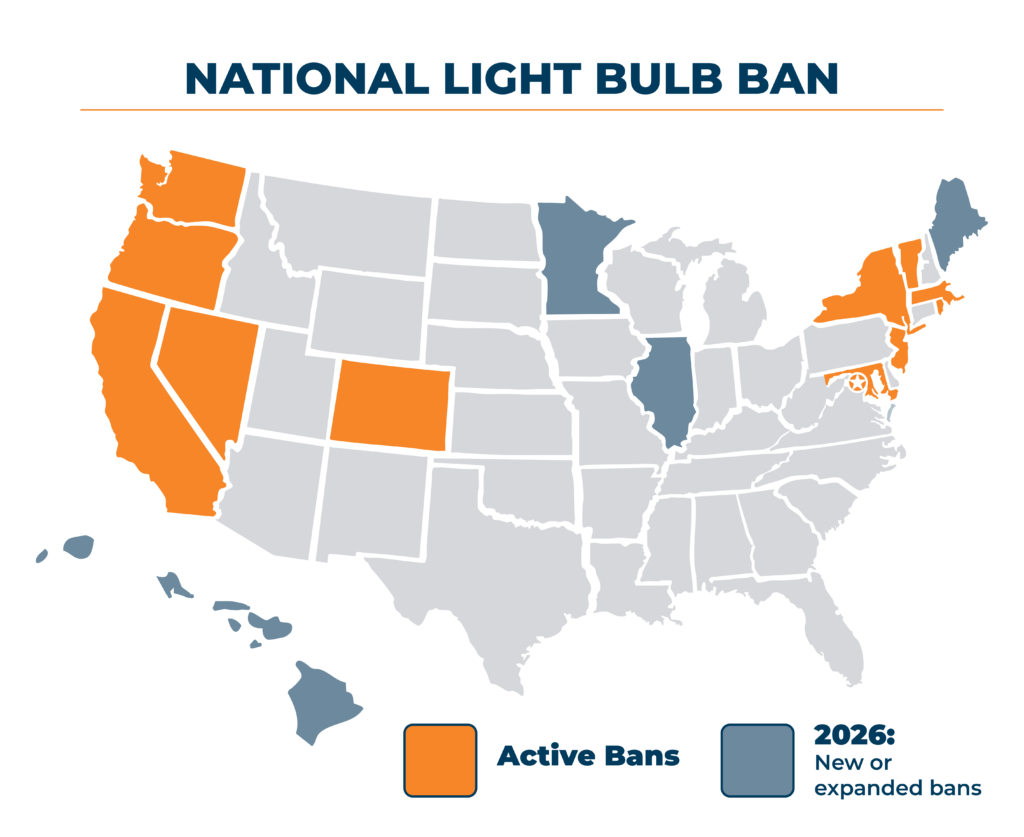
In recent years, many states have adopted bans on the sale of fluorescent and similar bulbs. On a local level, cities across the U.S. are passing building performance standard policies to help meet lower emissions and other energy efficiency goals.
At the same time, sustainability reporting increasingly requires defensible, system-level data.
Modern lighting systems can support:
- Documented energy performance at the fixture or zone level
- Integrated scheduling and controls records
- Seamless integration with building management systems
- Flexibility as codes and reporting frameworks evolve
Legacy LED systems were designed primarily for energy reduction—not necessarily for today’s reporting transparency and integration needs. As expectations rise, enhanced system capabilities can make compliance and reporting more straightforward.
Your Nationwide, Programmatic LED Partner
SitelogIQ is your one-stop partner to quickly and effectively meet your LED lighting targets. Our centralized approach aligns redesign, controls, compliance, and long-term performance, so your properties or facilities meet today’s requirements and are positioned for what comes next.
SitelogIQ is your contractor, consultant, and strategic partner for multi-measure energy efficiency, electrification, and renewable solutions. We provide a better way to plan, install, and report on the success of property or facility upgrade projects.
We’re here to help you navigate the entire LED lighting project process. Let’s chat about your needs today.